Funny Synonym for Getting Back Up on Your Feet
10 slang phrases that perfectly sum upwards their era
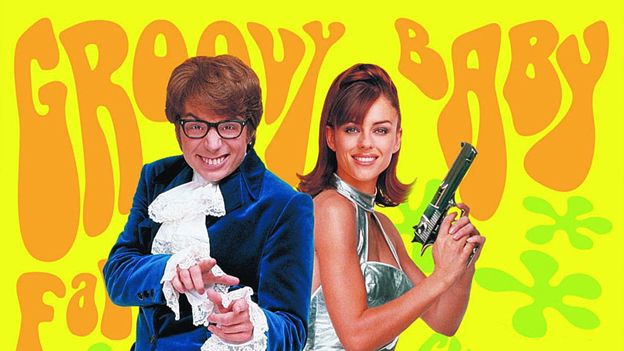 Image source, Alamy
Lexicographer Jonathon Green selects the slang words and expressions that encapsulate the historic period in which they were coined.
I've been collecting slang and and publishing books most information technology for 30 years. My database contains 125,000 words and phrases and they go on coming.
One thing I've learnt - the more than slang changes, to half-inch the well-known phrase, the more than slang stays the aforementioned.
Politically correct, even polite: I fear not. Merely humanity at its most man, absolutely.
As examples I offering a option of terms that display some of slang's nuts and bolts.
Alcohol
Image source, Getty Images
Information technology was in that location in the first always glossary of slang, the collection of criminal jargon published c.1532, and it's all the same going strong. Alcohol : Alcohol, drink, and as a verb, to drink. Information technology came from Dutch buizen , to drink to excess (and across that buise , a large drinking vessel) and the first examples were spelt bouse . Over the centuries it spread its wings. We find the drunk (both pub and person), the alcohol artist, -gob, -head, -freak, -hound,-hoister, -rooster, -shunter and -stupe , all drunkards. There are the pubs, saloons and bars - the booze barn, -bazaar, -casa , -crib , -articulation, -mill, -parlour, -factory, -foundry and -emporium. Across the mahogany (the bar counter) stands the booze clerk , - fencer or - pusher . If we hit the booze too heavily, we get a booze belly , and maybe a trip on the booze bus , Australia's mobile jiff-tester.
Diss
Prototype source, Alamy
Run DMC: "Don't effort to diss me"
Slang, being subversive to its very core, doesn't have much time for rules just like all language information technology has to accept one - words are always older than you think. Permit's take diss . Meaning - boldness. Origins - African-American, spread like so much of that slang-filled linguistic communication via the worldwide success of hip-hop and rap music. Appointment - ever since the late 1980s. Except, with the exception of the meaning, all that is wrong. Go dorsum, search amongst the vast number of online databases that are lexicography's gift from the internet. Look, digitally, at the Sunday Times of Perth, Western Australia. Specifically at 10 December 1906 and find: "When a journalistic rival tries to 'dis' yous / And to prejudice you lot in the public's optics." The next example is 1981. The simply question at present - what about the examples in betwixt?
Slap-up
I had met slang earlier - you couldn't read writers such as Sapper or PG Wodehouse and fail to note that not all language was restrained to the standard - but I doubt if I really started thinking "slang" till the 60s. Groovy , heavy , bag (of which Papa had a make new…), uptight (and outasite), thing , cool , dope… such were hippiedom'due south key words. That they came, unaltered, from an American black vocabulary that was effectually thirty years old was irrelevant. Ignorance, if not bliss, did not impede our use. Some were laid to remainder; others flourish. Dope withal means drugs, besides as affirming excellence. Cool marches on, re-minted for every youthful generation. As for groovy , information technology began life significant bourgeois (" stuck in a groove "); now the immature use information technology to mock those who pose every bit latter-day freaks .
Hipster
Image source, Alamy
An original hipster...
The original hipster wore Italian suits, listened to Charlie Parker'south brand of "cool" jazz, shot upwardly heroin and doubled every bit what Norman Mailer, in a famous essay of 1957, christened "The White Negro". Mass-marketed, he was the idealised stud of Hugh Hefner's "Playboy philosophy", at his incomparable best the taboo-shattering stand-upwards Lenny Bruce. Something libation and blacker than the beatnik , he was a cut in a higher place the hippie , which, pre-bells and beads, signified a failed or at best wannabe hipster. He vanished around 1960. Now he's back (and she too) and the Urban Dictionary describes "a subculture of men and women typically in their 20s and 30s that value contained thinking, counter-culture, progressive politics, an appreciation of art and indie-stone, creativity, intelligence, and witty banter". Been there, dare I say, done that likewise.
Image source, Thinkstock
... and two unoriginal ones
Non all there
Slang fails on caring, sharing and compassion but it does a good insult. Modernity lacks the 18th Century's excellent "y'all are a thief and a murderer: you accept killed a baboon and stolen his confront" but there is much on offer. Slang, as noted, pooh-poohs political correctness and has no time for euphemism, however justified, and while mental-health professionals might deplore the fact, lists a wide range of terms information technology defines as "mad". The over-riding image is "not all there". Take your pick from:A couple of chips short of an club , a butty , a happy meal or even a circuit-board, a few bob short of the pound , a few snags short of a barbie , one brick curt of a load , one sandwich brusque of a picnic , one terminate short of East Ham (aye, "barking") or ii wafers short of a communion .
Dosh
With "older than you think" nonetheless in mind, in that location's dosh - money. Like many of slang terms for cash, the inference is "something you lot demand", east.one thousand. the needful , staff of life , as in "the staff of life" or quid , from the Latin for "what", with "one needs" left unspoken. Dosh, which started life around 1850, may come up from a mix of "dollar" and "cash" but the root lies more likely in doss , a slumber, bed or lodging business firm, itself rooted in Latin's dorsus , the dorsum, on which i rests. Dosh was the money required to get that very basic necessity.
Bad=good
Slang, existence what Americans would term a contrary cuss , is never happier than when rendering its topics and terminology within-out, upside down and generally turning all bachelor arses about-face. Never more so than with those declared poles of morality, good and bad. It is a vocabulary, after all, in which practice good means to make substantial profits from crime and get good to become boozer. And bad ? Quite just, in slang'south looking-drinking glass surround, bad ways skillful. Albeit with a special sauce of sexiness and outsider cool.
It all starts with rum . In cant, the language of criminal beggars, rum meant good. The reason is lost, though in that location may exist links to Rome, both as a former majestic majuscule and in Romeville , cant for London. The image is of the slap-up and powerful urban center epitomizing something desirable.
"Expert" rum offered over 120 compounds. At that place was rum alcohol , which was good strong beer, there was a rum diver who was a competent pickpocket and a rum doxy who was a pretty girl. A rum kiddy was a smart young villain and rum nantz the best-quality brandy (from Nantes, whence it was exported). Then, around 1760, it all changes. We meet the rum cove , an odd or eccentric character, the rum phiz , a plain-featured face (phiz as in physiognomy), and of grade the rum 'un , a dubious individual.
"Bad" rum's descendants start emerging in the early 19th Century. There is terrible, nasty, awful, mean and hell. At that place is likewise, though today'due south immature might find this surprising, wicked , which turns upward in 1842. So it promptly disappears and does not re-emerge until 1908, often describing food (a " wicked ragout ") or beverage (a " wicked punch "). One tin can also milkshake a wicked foot . Exclamatory wicked! arrives in the 1970s (in the 50s musical Grease, though the "existent" fifties offer no examples) and really gets going - stand, Jamie Oliver - in the 90s.
Much is owed to hip-hop. Ill appeared in 1987, chilly and skanky (used elsewhere of drugs and floozies respectively) in 1989 and ghetto in 1996. The new century has added roughneck , beasty and treacherous .
Whole nine yards
Image source, Thinkstock
How long is that in metric?
Why practice people read slang dictionaries? Not for the spelling, nor the pronunciation. What they want is the etymologies - the stories behind the words. Unremarkably we can give them, although a surprising number are simply playing with standard English. Thus dog , with its compounds, offers 161 meanings in slang. But sometimes we can't. What, for case lies behind the phrase the whole nine yards ? We know that it comes out of US regional use, and is and then far first recorded in 1907. Just its origins? Virtually suggestions involve standards of measurement, from the dimensions of a nun's addiction to the capacity of a cement truck and the length of an ammunition prune to that of a hangman'south rope. Nonetheless, few, when checked, really run to ix yards. Information technology may be no more than the use of ix equally a form of mystic number. Your guess, dare I admit, peradventure be fifty-fifty better than mine.
Nang
Slang may stay the same but the lexis evolves. Standard English language laid downward such terms as drunk or sexual intercourse centuries ago. Slang, not and then much a linguistic communication (where's the grammar?) but rather a vast compendium of synonyms, has respectively 3,000 and one,750 terms for each. That the sometime tend to suggest some grade of concrete ineptitude and latter, sadly, too often boils down to "man hits woman", does non mean in that location won't be more. Merely there are real novelties. Nang , significant kickoff-rate, is an example of slang's electric current cutting border, Multi-ethnic London English language (MLE). This mix of Jamaican patois, American hip-hop, Cockney classics and the coinages of youthful Londoners has added much to slang'south vocabulary. Nang, imported from the Caribbean area where it means ostentation or style and rooted in Mende nyanga , showing off, is 1 of the better-known examples.
Yolo
Image source, Getty Images
Slang is imperceptible. So runs the critique. As booze and thousands of other terms brand clear, this is far from the dominion. Simply yes, some things don't last. Yolo - you lot simply alive once - was the flavour of the month, even year, non that long ago. Today few slang users worthy of their mental attitude would be heard using information technology. It is far from alone. In 1840 Charles McKay, in his book Memoirs of Extraordinary Popular Delusions, listed a number of defunct, notwithstanding one time hugely popular catchphrases. Among them - has your female parent sold her mangle? walker! quoz! flare up! and there he goes with his eye out! Each, every bit Mackay noted, was "the slang par excellence of the Londoners, and afforded them a vast gratification". And at present? All gone, non to mention forgotten.
Follow @BBCNewsMagazine on Twitter and on Facebook
Source: https://www.bbc.com/news/magazine-27405988
0 Response to "Funny Synonym for Getting Back Up on Your Feet"
Post a Comment